Real Estate Tokenization in Australia: ASIC Framework, SPV Options, and Deal Structuring
A practical guide to real estate tokenization in Australia, exploring ASIC rules, SPV structures, and licensing through a $30M Sydney development scenario.

Take a representative deal. A Sydney developer with a $30M mixed-use project in Surry Hills wants to tokenize 40% of the equity, roughly $12M, and distribute it to wholesale investors across Singapore and Hong Kong, with a smaller Sydney allocation. The asset is identified, the LVR is acceptable, and the cap table is clean. Real estate tokenization in Australia rarely fails on the technology. It fails on configuration timing: SPV selection, AFSL pathway, investor classification, and trust structuring together determine whether the deal closes cleanly or drags into a lengthy restructure.
The blockchain layer is the smallest decision. What follows is a working map of ASIC's current position alongside the corporate structures that survive scrutiny, plus the offshore alternatives developers keep asking about.
How ASIC Frames Real Estate Tokenization in 2026
The baseline rule in Australia is simpler than most developers assume: a tokenized property interest is treated as the financial product it represents, not as a new asset class. The regulator's working document, Information Sheet 225, applies to "businesses and people offering products and services in relation to digital assets generally", which captures most platforms and issuers touching a token sale.
The October 2025 finalised update closed a year of consultation. The release set out ASIC's settled views on when digital assets are caught by the existing Corporations Act regime, paired with a no-action posture for certain providers through 2026 to allow adaptation. For a Surry Hills tokenization planned for completion by June 2026, that transitional window matters, but only as a runway, not as a permanent exemption.

The classification rule is this: if a token gives the holder a right to a share of rental income or any pooled economic interest in property managed by someone else, including a claim on sale proceeds, ASIC treats it as an interest in a managed investment scheme. The wrapper changes nothing. The promise to the investor is what triggers the regime.
The signal from Canberra is moving in the same direction. At the ASIC Annual Forum in November 2025, Chair Joe Longo told the industry that Australia must "innovate or stagnate" as global financial markets restructure, with tokenisation named specifically as a strategic focus area. That is not a green light for unlicensed activity. It is confirmation that the existing rulebook will be the rulebook, applied to digital wrappers without a new category being invented to soften it.
For a developer, the implication is direct. The first compliance question is not "which chain" but "which financial product is the token". Get that classification right and the rest of the build follows a known regulatory map. Get it wrong and the structure has to be unwound before the first investor signs.
Managed Investment Scheme Classification and AFSL Triggers
Most tokenized property deals in Australia land inside the managed investment scheme (MIS) perimeter. Once pooled investor money sits in a vehicle that someone else manages, the Corporations Act 2001 engages. With it, an Australian Financial Services Licence (AFSL) requirement for the responsible entity, the platform operator, or both.
When the MIS line is crossed
A single-investor purchase of a whole property through a token wrapper sits outside MIS. A 40-investor pool funding a Surry Hills development sits inside it. The threshold is pooling plus external management, not the technology layer. Tokenisation in the real estate context usually involves dividing property into shareable digital units that represent ownership or economic rights, which is the classic MIS fact pattern.

Licence configurations that work
A platform operator that arranges issuance, custodies tokens, and facilitates secondary transfers typically needs AFSL authorisations covering the following: dealing, arranging, custodial services, and operating a registered scheme, plus AUSTRAC registration for KYC/AML duties. The stacked obligations are consistent across the market: Corporations Act 2001, MIS regulations, AFSL authorisations, and AUSTRAC-based KYC/AML compliance.
ASIC has also introduced transitional support mechanisms allowing compliant platforms to operate while adapting to evolving frameworks around digital securities and settlement layers. That eases the build phase. It does not eliminate the end-state licensing requirement.
Deal pattern | MIS classification | AFSL authorisations needed | Investor type |
|---|---|---|---|
Single-property pool, <20 wholesale investors | Unregistered MIS | Dealing, advising (wholesale) | s708 wholesale only |
Single-property pool, retail investors | Registered MIS | Operating a registered scheme, custodial, dealing | Retail with PDS |
Multi-asset fund with active management | Registered MIS or wholesale fund | Full fund authorisations + responsible entity | Mixed, depends on offer |
Platform aggregating third-party issuers | Platform itself may need AFSL | Markets-style authorisations + custody | Depends on listings |
Where developers underestimate cost
The binding limit on a fast launch is rarely the token contract. It is the responsible entity capacity. Renting RE services from a licensed third party shortens the path; building an in-house RE adds 9–14 months. Most $30M-class deals route through an existing licensed RE under a sub-fund arrangement, the economics are tighter, but the timeline survives. The KYC/AML obligations attach regardless of who holds the licence.
SPV and Trust Structures for Australian Property Tokens
Every tokenized property deal in Australia needs a legal wrapper that owns the asset and issues the units the tokens represent. The rule is blunt: all real estate tokenisation projects must use a legal wrapper, usually an Australian company. That holding entity, whether company or trust, is what investors actually own when they hold a token.
Three structures dominate. Each handles distributions and tax differently, and shapes the investor mix in its own way, the choice is rarely interchangeable once a deal is underway.

Pty Ltd SPV
A proprietary limited company holds the property; tokens map 1:1 to shares (or to beneficial interests in shares held by a bare trustee). It is simple to incorporate and familiar to ASIC, with a clean profile for foreign investors. The drawback is tax: company-level tax at 30% on rental income, with imputation credits useful only to Australian taxpayers. The SPV, or a trust or dedicated company, is the standard legal entity used for tokenization structuring.
Unit trust
A unit trust, often managed by a corporate trustee, holds the property and issues units that the tokens represent. Tax flows through to unitholders, which suits wholesale and offshore investors. The pattern is standard: the physical property is owned by an SPV or trust, and investors hold tokens that represent ownership in that entity. For a 40-investor pool with mixed domestic and APAC holders, the unit trust is the default, but it activates MIS rules immediately.
Head trust with sub-SPV
For multi-asset portfolios, a head unit trust holds equity in several Pty Ltd sub-SPVs, each owning one property. Tokens are issued at the head-trust level. This isolates asset-level liabilities while supporting phased acquisitions, and it lets one responsible entity govern a portfolio without re-tokenising each addition. The SPV vs trust vs fund wrapper analysis covers the trade-offs by asset type in more depth.
Structure | Tax treatment | Best for | Setup time |
|---|---|---|---|
Pty Ltd SPV | 30% company tax, imputation credits | Single asset, AU-taxpayer investors | 2–3 weeks |
Unit trust (with corporate trustee) | Flow-through to unitholders | Wholesale APAC mix, single asset | 4–6 weeks |
Head trust + sub-SPVs | Flow-through at head level, ring-fenced assets | Multi-asset portfolios, phased build | 6–10 weeks |
For the Surry Hills scenario, mixed-use, single asset, 40% equity to APAC wholesale, the unit trust with a corporate trustee is the working default. It gives flow-through tax treatment to Singapore and Hong Kong holders, fits cleanly inside a wholesale MIS, and avoids the imputation-credit waste that a Pty Ltd would create for non-resident investors.
Offshore Issuance vs Domestic Pathways for ASIC Tokenization
The recurring question from developers is whether routing the token issuer through Cayman, BVI, or Singapore sidesteps Australian licensing. The short answer is no, at least not when the property sits in Sydney and the marketing reaches Australian investors.
ASIC is explicit on this in INFO 225: "The use of offshore or decentralised structures does not mean that key obligations under Australian laws do not apply or can be ignored." The regulator points to Regulatory Guide 121 on doing financial services business in Australia, which captures conduct directed at Australian investors regardless of where the issuing vehicle is incorporated. An offshore wrapper does not neutralise the AFSL question; it adds a layer of complexity to it.

Where offshore structures still add value is cross-border distribution to non-Australian investors. A BVI feeder fund subscribing for units in the Australian head trust can pool offshore capital efficiently, with the feeder handling its own jurisdictional KYC. A Singapore VCC can serve the same function for APAC family offices that prefer a familiar wrapper. Both designs accept that the underlying Australian MIS and AFSL obligations remain in place at the asset level.
The token itself is a digital representation, typically issued and managed on a blockchain, that corresponds to an ownership interest, claim, or specific right. That definition is jurisdiction-neutral. Australian law decides what attaches to it when an Australian investor buys one.
The structural implication is that offshore vehicles are useful for distribution, not for licence avoidance. Developers treating Cayman as a regulatory shortcut tend to discover the gap during the first wholesale investor's legal review, not before.
Market Context: Why Australian Property Tokens Are Scaling Now
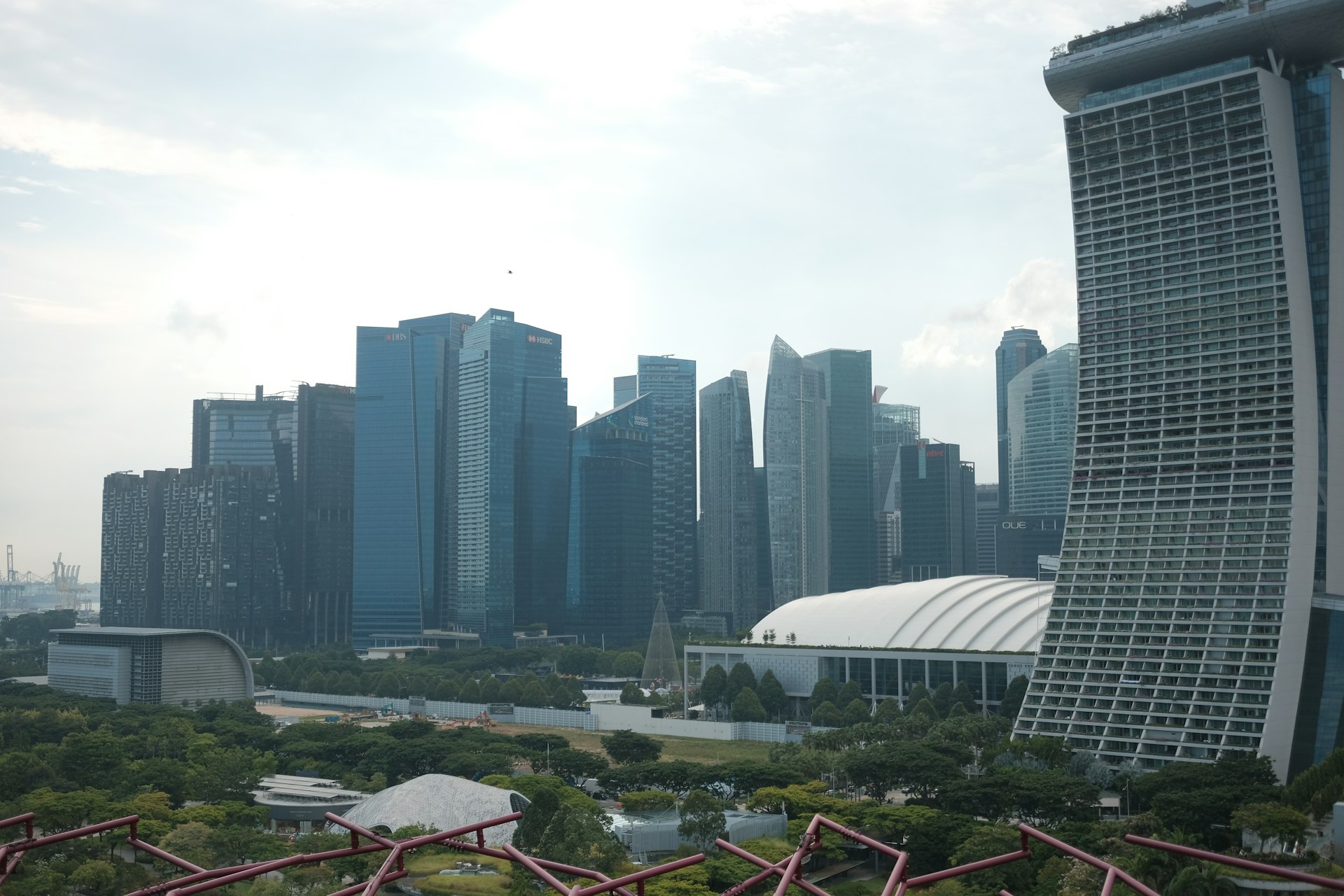
The Australian property stack is large enough that even small fractional adoption produces meaningful deal volume. The Australian residential and commercial property stack is estimated at roughly AUD 10.9 trillion, ranking the market among the most valuable real estate classes globally. The methodology aggregates residential alongside commercial and industrial holdings, and should be read as an order-of-magnitude indicator rather than a single-source registry.
Global forecasts add the second variable: how much of that pool ends up on-chain. Deloitte's 2025 prediction projects tokenized real estate reaching roughly USD 4 trillion globally by 2035, growing at a compound rate above 25% from a low single-digit base. The caveat matters, the projection assumes parallel development across several fronts: regulatory clarity, custody infrastructure, and secondary liquidity, none of which are certain.
The Australian regulatory catalyst arrived in late October 2025. ASIC's guidance made explicit how existing laws apply to digital assets, covering:
stablecoins
wrapped tokens
tokenized securities
digital representations of pooled investments
Clarity, even cautious clarity, unlocks deals that compliance teams had paused.
Configuration Checklist for a $30M Sydney Deal
Returning to the Surry Hills reference: a $30M mixed-use project, 40% equity tokenized ($12M raise), targeting 40–60 wholesale investors across Sydney and the Singapore–Hong Kong corridor. The configuration sequence below is what a realistic 90–120 day path looks like.
Step 1: Confirm the financial product classification
The first decision is what the token represents. Tokenisation here is the process of converting rights or ownership interests in an asset into a digital token on a blockchain, the evolution of securitisation into a digital format. For Surry Hills, the token represents a unit in an unregistered wholesale MIS, paying quarterly distributions from net rental income and a capital event distribution at sale or refinance.
Step 2: Establish the SPV and trustee
Incorporate the property-owning unit trust with a corporate trustee. Engage a licensed responsible entity under a sub-fund arrangement, this removes the 9–14 month internal AFSL build. The constitution is drafted to allow unit issuance, transfer, and redemption in line with the token logic.
Step 3: AFSL pathway and wholesale-only positioning
Wholesale-only distribution under section 708 of the Corporations Act avoids the PDS regime. Each Australian investor needs a section 708 certificate from a qualified accountant. Offshore investors flow through their own jurisdictional rules: Singapore accredited-investor status or Hong Kong professional-investor status, verified by the platform before allocation. The wholesale pathway is the working default for current Australian deals.
Step 4: Token economics
Issue 12,000 tokens at AUD 1,000 each. Quarterly distributions are paid in AUD to wallets-of-record, with on-chain transfer restrictions enforcing the wholesale-only register. Whitelist-only transfers; no public secondary trading; controlled OTC matching through the platform after a 12-month holding period.
Step 5: Custody and onboarding
Investor identity verified through a KYC provider integrated with AUSTRAC reporting. Tokens custodied either by the investor's self-hosted wallet on an approved whitelist or by a regulated custody partner.
Step 6: Distribution and reporting
Deliverables include a quarterly NAV statement, annual audited accounts of the trust, ongoing MIS reporting through the responsible entity, and trustee-level compliance attestations. The full lifecycle from constitution to closed primary issuance fits inside 90–120 days when steps 1–3 run in parallel from week one.
Australian real estate tokenization works under existing law. The economics survive only when the SPV structure and AFSL pathway are configured alongside investor classification from day one, not sequenced as separate workstreams that converge at the end. Treat the legal wrapper as the architecture, not the wrapper of the architecture, and the 90-day close is realistic.
Tokenizer.Estate provides the software layer for deals like this, and can help you think through how the structure fits together before you commit to a build.
Share this post
Build your own tokenization business with Tokenizer.Estate
Tokenizer.Estate provides a full end-to-end solution — from legal setup to blockchain infrastructure — to help you launch your project with confidence
Book a Free Demo