RWA Tokenization Market Size: What the 2030 Projections Actually Say
RWA tokenization forecasts range from $2T to $30T+ because reports measure different things: tokenized asset value vs business opportunity vs demand, and some include the “money layer” (deposits, stablecoins). This guide aligns the numbers so you can compare them fairly.

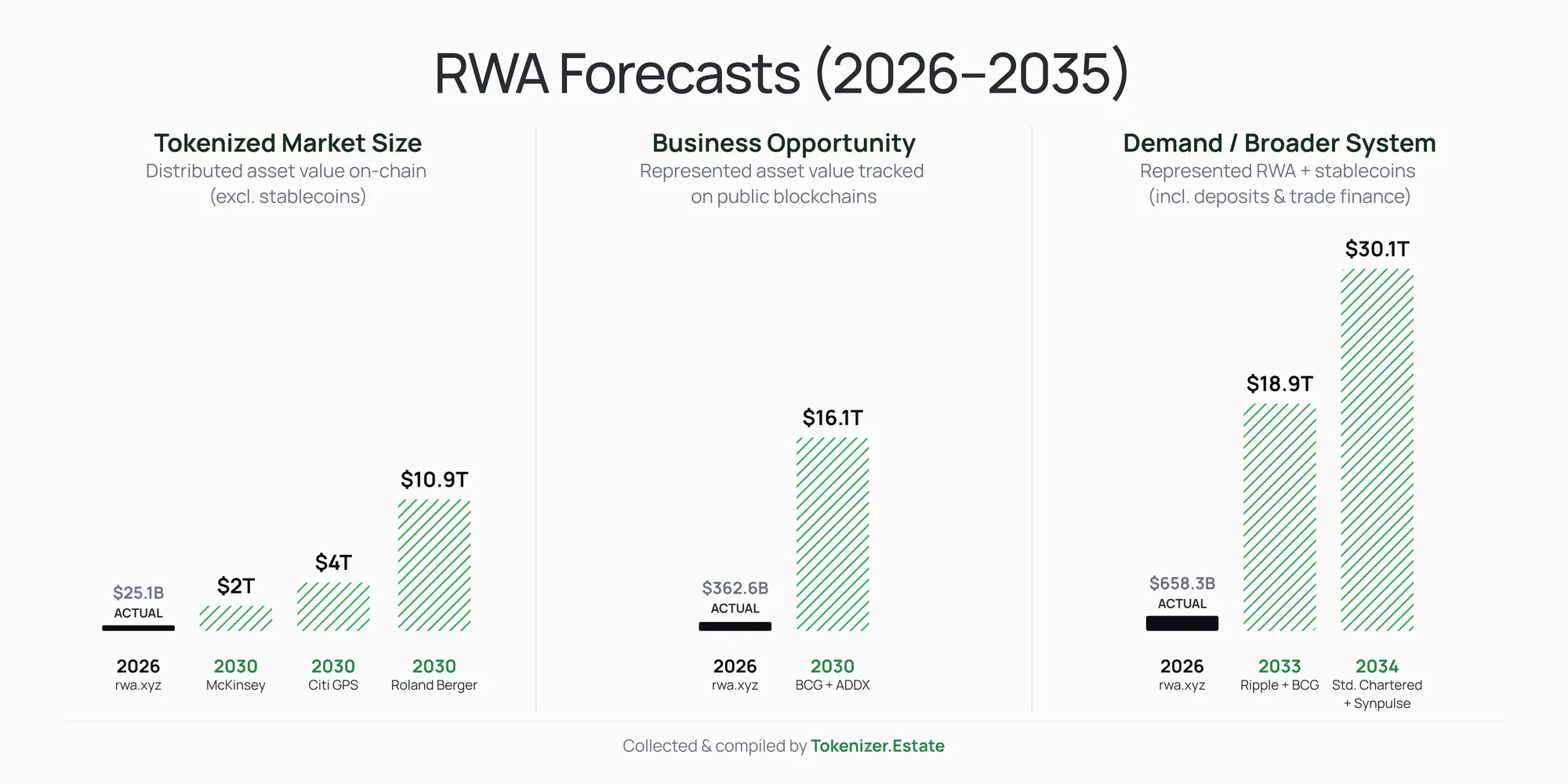
Forecasts about real-world asset (RWA) tokenization can look strange at first. One report talks about $2 trillion, another about $10 trillion, and some go up to $30 trillion. The gap is not only hype. It usually happens because the reports count different things.
Some papers estimate the future value of tokenized assets (close to “market size”). Others describe a wider business opportunity (a bigger economic upside). And some focus on demand (how much investors may want to buy and use tokenized assets). Another big difference is whether a model includes only assets, or also tokenized “money” like deposits and stablecoins.
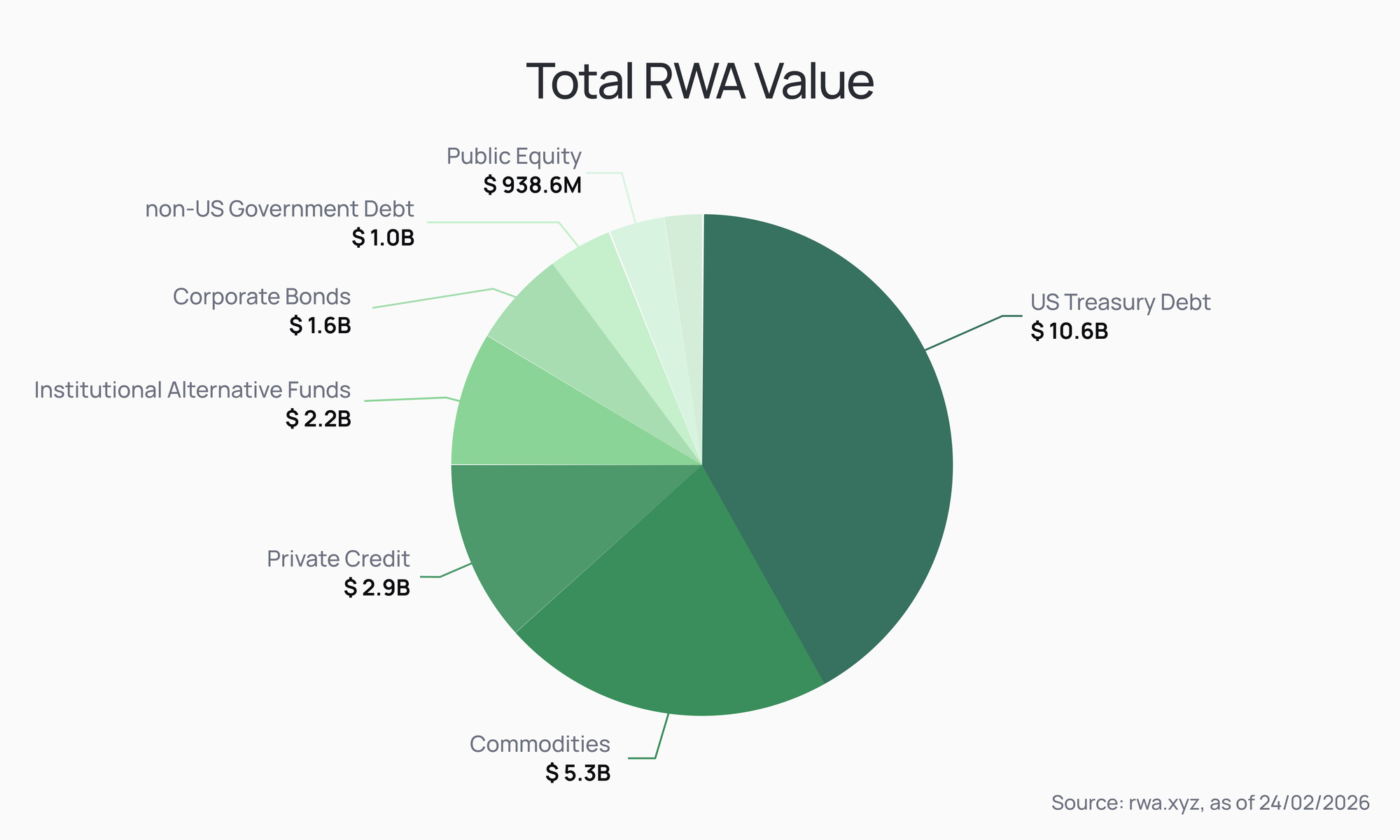
RWA Market Snapshot (2026): Total Value by Asset Type
McKinsey
McKinsey gives one of the most careful baseline numbers. In 2024, it estimated that tokenized financial assets could reach about $2T by 2030, with a wider range around that figure. McKinsey also makes a clear choice about what it does not count: it excludes cryptocurrencies and stablecoins, and it also excludes “cash legs” like tokenized deposits and CBDCs to avoid double counting.
Citi GPS
Citi’s 2023 Citi GPS report takes a broad view of blockchain adoption, and it calls tokenization a “killer use case.” The paper spends a lot of time on private markets, where access is limited and processes are slow. In that setup, Citi points to tokenization in private markets growing strongly, reaching almost $4T by 2030.
Roland Berger
Roland Berger’s 2023 report is a wide map of the tokenization landscape. It explains which asset types may fit tokenization and why the total can become very large when you include many categories. Their headline forecast is at least about $10.9T by 2030, with big parts coming from areas like real estate, debt, and funds.
BCG + ADDX
BCG and ADDX are often quoted for one line: $16.1T by 2030. The important detail is the label. This figure is described as a business opportunity, not simply the value of tokenized assets. The same report also mentions a much higher best-case scenario (up to $68T), which shows how much results can change with different assumptions.
Ripple + BCG
Ripple and BCG (2025) describe tokenization as moving closer to a tipping point. Their midpoint forecast grows from about $0.6T in 2025 to about $18.9T in 2033, with a wide range. A key reason the total becomes so large is that their breakdown includes parts of the “money layer,” such as deposits and stablecoins, not only traditional asset categories.
Standard Chartered + Synpulse
Standard Chartered and Synpulse (2024) tell a different story. They focus heavily on trade finance and frame the market in terms of demand for tokenized assets, not only supply. Their headline number is up to $30.1T by 2034, and they estimate trade finance could reach up to 16% of the tokenized market. They also note that today’s tokenized RWA base (excluding stablecoins) was around $5B in early 2024, which is why they talk about a big gap between potential demand and today’s scale.
Deloitte
Deloitte’s 2025 article is narrower and more practical: it focuses on tokenized real estate. Deloitte forecasts that tokenized real estate could reach $4T by 2035, rising from less than $0.3T in 2024 (they also provide a growth rate and a breakdown by sub-segments).
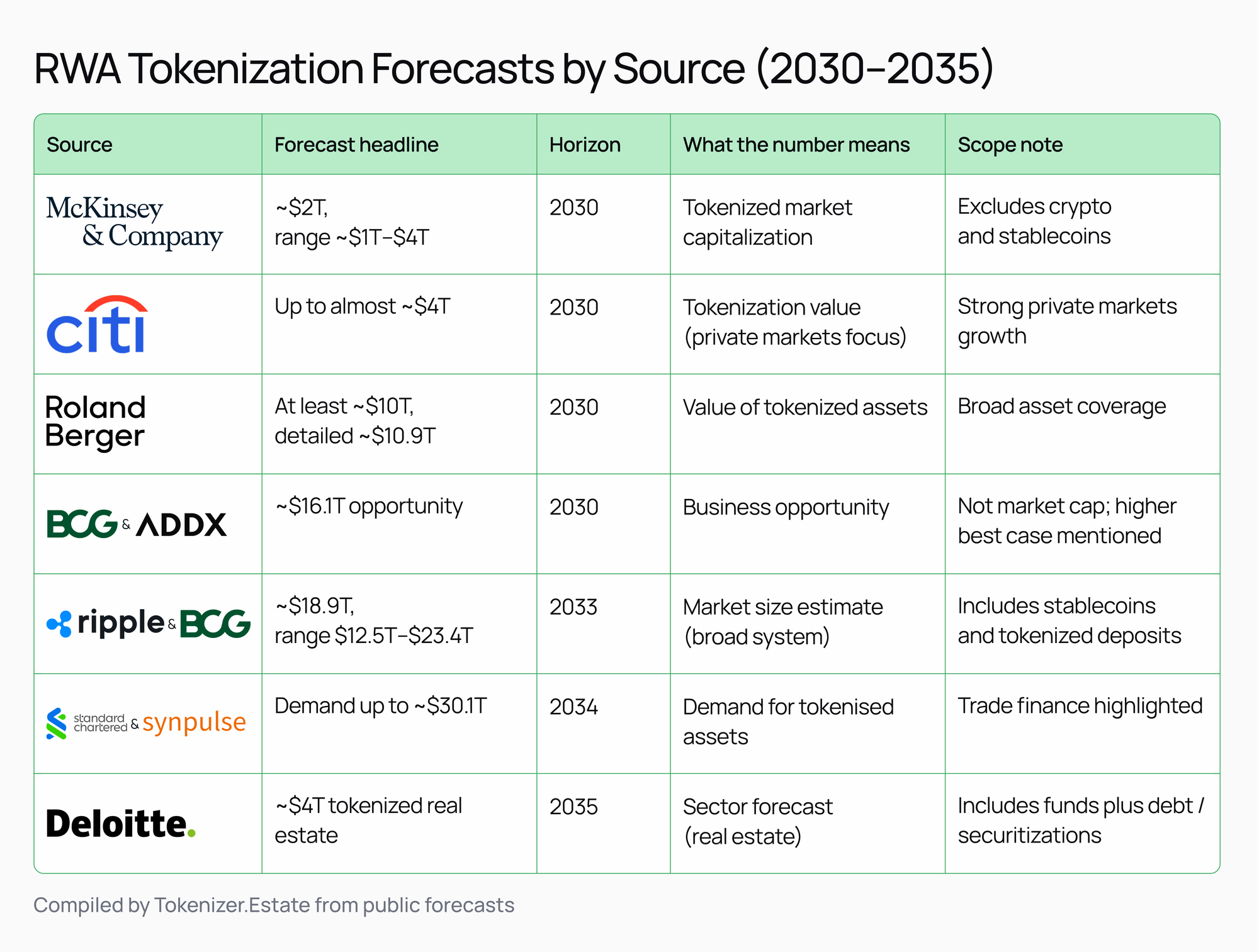
RWA Tokenization Forecasts by Source (2030–2035)
Conclusion
At Tokenizer.Estate, we read these forecasts as different views of the same trend, not as one single “right” number. The most cautious, assets-only outlooks (like McKinsey) point to low-trillion scale by 2030. Wider asset coverage (like Roland Berger) moves the total higher, because it counts more categories.
The largest numbers usually appear when a report measures something broader than asset value. For example, BCG + ADDX talks about a business opportunity, not only tokenized market value. Ripple + BCG and Standard Chartered + Synpulse also use wider frames: they include parts of the money layer (deposits, stablecoins) or focus on demand, where trade finance plays a big role.
What is clear across all sources is the direction: tokenization is expected to grow from today’s tens of billions (still early stage) toward trillions over the next decade, with outcomes depending on scope, regulation, product design, and real adoption in payments and real-economy workflows. We will keep tracking the market with the same principle: respect the topic, stay precise, and separate market size, opportunity, and demand.
These forecasts look very different because the reports use different lenses. Some estimate tokenized asset value (market size), others measure business opportunity or demand, and some also include the “money layer” such as deposits and stablecoins. This chart helps you compare the reports without mixing unlike numbers.
Share this post
Build your own tokenization business with Tokenizer.Estate
Tokenizer.Estate provides a full end-to-end solution — from legal setup to blockchain infrastructure — to help you launch your project with confidence
Book a Free Consultation