Data center tokenization: how issuers bring the AI real estate boom on-chain
Data centers became the most capital-hungry real estate class of the AI era. Here is how issuers tokenize them, what makes the asset different from an office tower, and where the risk actually sits.

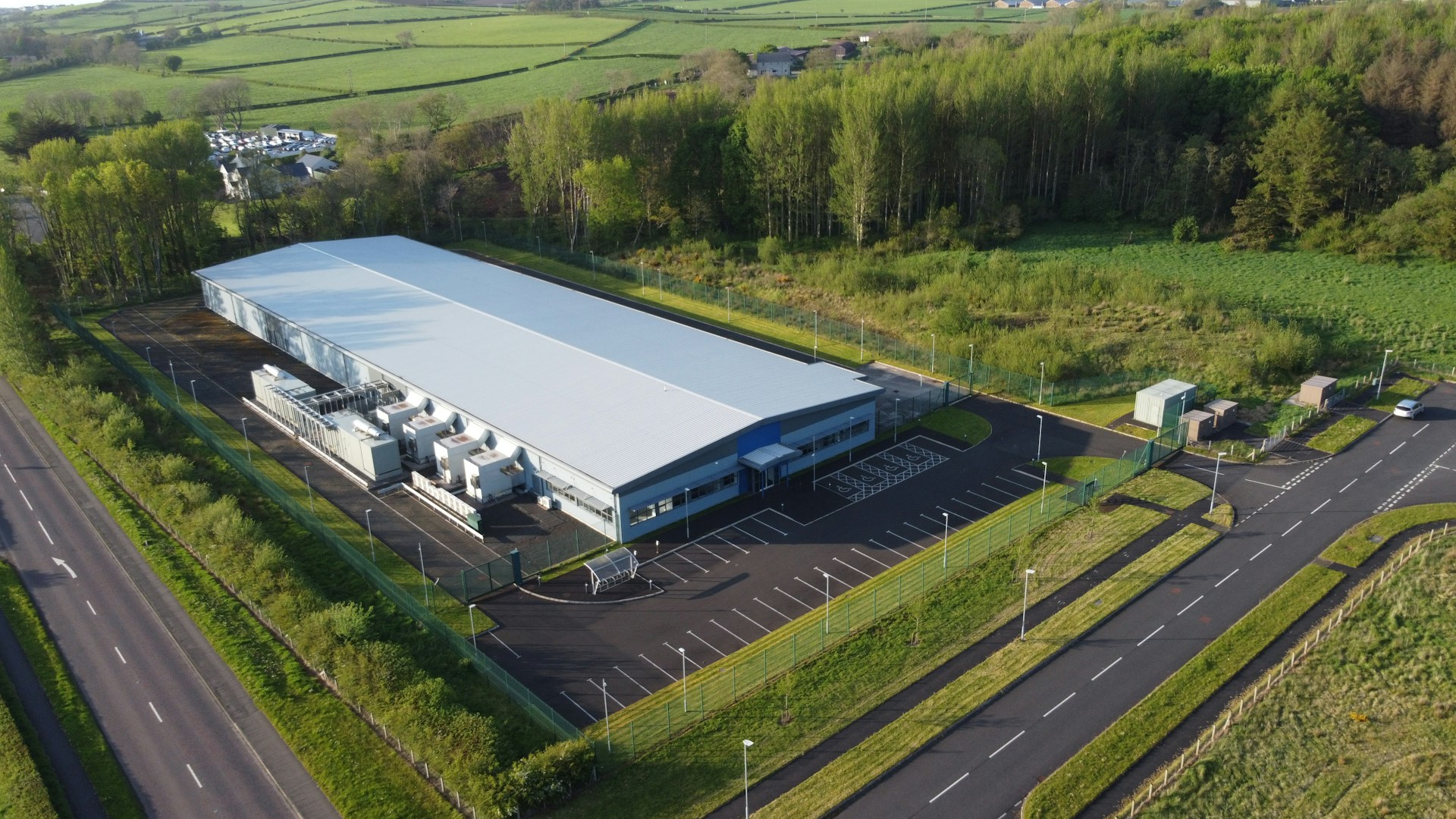
Three years ago, a data center was a boring building. A low box near a substation, leased to a telecom or a corporate IT department, underwritten like a specialized warehouse. That framing is gone. The AI build-out turned data centers into the most capital-hungry corner of real estate, with the largest cloud operators guiding toward record capital spending and vacancy across North American markets sitting near historic lows.
That much capital moving that fast creates a financing problem, and financing problems are where tokenization earns its place. Data centers are already being funded through special-purpose vehicles and securitized lease income; tokenization is the next step on the same track. This guide is the deep-dive on data centers specifically; for how tokenization works across commercial real estate more broadly, offices, warehouses, and the rest, that guide covers the wider ground. Here the focus is narrow: this is for the issuer side, the developer, the operator, or the fund that owns or builds digital infrastructure and wants to understand how tokenizing it actually works, what makes the asset different from an office tower, and where the risks that matter really sit.
Why Data Centers Became a Financing Story
The demand is real and it is documented. The data center sector is one of the fastest-growing segments of commercial real estate, with large amounts of new capacity planned and significant asset value being created in the build-out. The largest cloud operators are driving it, signing leases for capacity that will not be delivered for two or three years.
For an owner, the appeal as an asset is specific. Stabilized data centers leased to strong tenants trade at cap rates in the range of prime industrial logistics, below office and retail, because the cash flow looks unusually good: leases run for long terms, often a decade or more, and the tenants on the best deals are among the most creditworthy companies in the world. A long lease to a credit tenant is the closest thing real estate has to a bond.

But the capital required to build has outrun what traditional equity and bank debt can supply. Conventional financing alone is increasingly insufficient for the scale of AI infrastructure, and operators want to keep their balance sheets flexible rather than loading them with debt. That gap is why the sector reached for structured finance first, and it is the same gap tokenization addresses: a way to raise capital from a wider pool of investors, at terms the issuer sets, against an asset with a clear, contracted cash flow.
What Makes a Data Center Different to Tokenize
The legal backbone of tokenizing a data center is the same as any real estate deal: a special-purpose vehicle holds the asset, and tokens represent a claim on the SPV, not on the building directly. What changes is the underwriting. A data center is not underwritten on the value of the concrete and land the way an office building is. Three things sit on top, and every one of them shapes the token.
Tenant credit is the asset. The single most important variable is who signs the lease and how solid their commitment is. A data center leased to a top-tier cloud operator on a long-term lease is a fundamentally different instrument from the same building leased to a smaller, sub-investment-grade operator. Financing for these assets is underwritten on tenant creditworthiness, lease quality, and the specific terms of the lease, not just the property value. For a tokenized deal, that means the tenant and the lease terms are the core of what a token holder is actually buying, and the disclosure has to make that plain.

Power is the binding constraint. In this market, the limiting factor is often not capital, it is electricity. A project without secured power is difficult to finance, regardless of how strong the demand thesis sounds. Access to a contract for real transmission capacity by a firm date is what separates a real project from an announcement. Data centers depend on long-term power arrangements, and an issuer tokenizing a data center is implicitly asking token holders to rely on that power arrangement holding up. If the power is not locked, the token is not backed by much.
Depreciation runs faster than the building. An office building lasts for decades. A data center can face technological obsolescence far sooner, because the equipment inside and the design around it age quickly against a moving target. The real estate outlasts the fit-out, but the value of the asset is tied to its ability to keep serving current workloads. A tokenized data center has to account for this: the exit and the asset's useful life are shorter and less certain than a conventional building, and pretending otherwise misprices the token.
How an Issuer Structures a Tokenized Data Center
The structure follows the path the asset's own financing already takes, with tokenization layered on as the capital-raising mechanism.
The asset goes into an SPV. A special-purpose vehicle holds the data center, or a defined interest in it, and isolates the asset and its cash flows from the operator's other activities. This is the same bankruptcy-remote logic that data center securitizations already use, where lease receivables are pooled into an SPV that then issues securities against them. For tokenization, the SPV is the entity the tokens represent.
The token is defined against the cash flow. The issuer decides what the token actually is. An equity token gives holders a share of the SPV's residual value and income after costs. A debt token gives a fixed claim: a defined coupon funded by the lease payments, with priority over equity. For a data center with a long lease to a credit tenant, a debt structure maps cleanly, because the lease income is predictable and the token can be sized against it. The token is a permissioned token, the standard used for regulated securities, so transfer rules live inside the contract and a token cannot move to a wallet that has not cleared KYC or sits in a restricted jurisdiction.
The lease income drives distributions. A smart contract moves the contracted income to token holders on schedule, usually in a stablecoin, keyed to a snapshot of who holds the tokens. The same servicing edge cases apply as in any tokenized real estate distribution: withholding by tax residency, failed transfers to frozen wallets, and the split between income and return of capital. The difference is what sits behind the payment: not diversified rent from many tenants, but a concentrated stream from one or a few large leases.
Seniority has to be explicit. Data centers are often already financed with construction debt, project finance, or securitized notes. A tokenized tranche has to slot into that capital stack at a defined position, senior or subordinate, and token holders have to know exactly where they sit before they subscribe. A token that is quietly junior to an existing loan is a different risk from one that is not.
Where the Risk Actually Sits
The reason a tokenized data center can offer a yield above a government bond is not a free lunch. It is a set of specific risks, and an issuer should be able to explain each one plainly.

Tenant concentration. Most of the cash flow comes from one or a few tenants. If a major tenant exercises a termination right, downsizes, or runs into trouble, the income behind the token is directly exposed. This is different from a multi-tenant building where one departure is absorbed by the rest. Concentration is the core risk of the asset class.
Power and utility risk. If the power arrangement fails, is delayed, or the interconnection does not materialize on schedule, the asset cannot operate at capacity, and the cash flow behind the token suffers. Utility counterparty risk is a live concern in this market, not a theoretical one.
Technology obsolescence. The faster depreciation cycle means the asset's value and re-leasing prospects can erode more quickly than a conventional building. A token holder relying on a long-term hold is exposed to the risk that the facility needs significant reinvestment, or cannot be re-leased on the same terms, before the horizon they expected.
Liquidity. As with any tokenized real estate, secondary trading is thin and a token may not be redeemable on demand. The compliant path to a wider investor base is real; deep secondary liquidity is still mostly ahead. An issuer should not market liquidity the product does not have.
These tokens are securities. They answer to securities law in most jurisdictions, not to a lighter crypto regime, and the offering has to be structured inside a recognized exemption the same way any tokenized real estate deal is.
Why This Fits Tokenization Well, and Where It Does Not
Data centers are, in one sense, an unusually good fit for tokenization. The thing tokenization does best is turn a contracted, predictable cash flow into a programmable instrument, and a long lease to a credit tenant is exactly that. The income is defined, the term is long, and the servicing is mechanical. Compared to an office building with variable occupancy and a valuation that drifts, a stabilized data center on a long-term lease is cleaner to encode.
Where it does not fit is at the riskier end of the asset class. A speculative project without secured power, or one leased to a weaker tenant, carries risks that a clean on-chain interface can hide rather than resolve. Tokenizing it does not make the power certain or the tenant creditworthy; it just distributes the risk to more holders. The honest version of data center tokenization is for stabilized or well-contracted assets, where the token represents a genuinely backed claim, not a bet dressed up as infrastructure.
For a developer or operator, the practical framing is this. Tokenization does not replace the hard parts of the business: securing power, signing tenants, building to spec. It is a way to finance an asset that already has those things, by opening it to a wider pool of investors under the issuer's own brand, on a compliant rail, with automated servicing. The asset has to be real first. The token is the capital layer on top.
A developer or fund mapping a specific data center to this structure can review the platform configuration and book a call. We share what we have seen work across similar projects, and bring in a legal partner in the relevant jurisdiction to work through the wrapper, the token design and the servicing logic before issuance.
This article is for informational purposes only and does not constitute investment, legal, or tax advice. Data center tokenization carries tenant-concentration, power, obsolescence, and liquidity risk; conduct your own due diligence and consult qualified counsel before issuing or investing in any tokenized infrastructure asset.
Share this post
Build your own tokenization business with Tokenizer.Estate
Tokenizer.Estate provides a full end-to-end solution — from legal setup to blockchain infrastructure — to help you launch your project with confidence
Book a Free Consultation